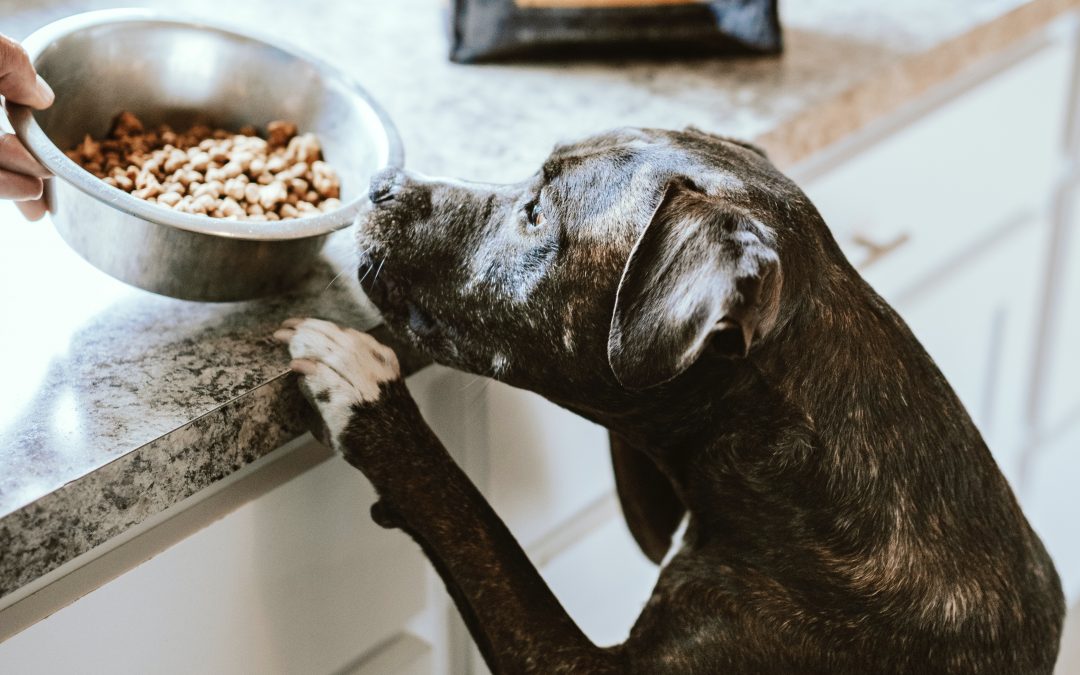
The anatomy of a dog’s nose is designed to maximize their sense of smell. Dogs have a wet nose that is covered in mucus, which helps to capture and hold onto scent molecules. The nose also contains special receptors called olfactory receptors, which are responsible for detecting and identifying scents. In fact, dogs have up to 300 million olfactory receptors in their noses, compared to humans, who only have about 5 million.
In addition to the wet nose and olfactory receptors, dogs also have a specialized part of their nose called the Jacobson’s organ, which is located in the roof of their mouth. This organ helps dogs to detect pheromones, which are chemical signals released by other animals that can convey important information about their identity, status, or reproductive state.
Physiology of a Dog’s Nose
Dogs are able to use their noses to detect scents because of the way their nasal passages are structured. When a dog takes a breath in, air is directed through two separate pathways. One pathway is used for breathing, while the other pathway is used for smelling. This allows dogs to take in a lot of scent molecules with each breath, which helps them to quickly detect and identify scents.
Once the scent molecules are inhaled, they bind to the olfactory receptors in the dog’s nose. These receptors are highly specialized and can detect even the faintest traces of a scent. Once a scent is detected, the dog’s brain processes the information and can identify the scent based on previous experiences.
Behaviour of a Dog’s Nose
Dogs use their noses in a variety of ways, depending on their breed and training. Some dogs, such as hunting breeds, are trained to use their noses to track prey. These dogs are able to follow scent trails for miles and can detect scents even days after they were left.
Other dogs, such as search and rescue dogs, are trained to detect human scent. These dogs are able to track missing persons by following their scent trail, even if the trail is several days old. Some dogs are even trained to detect specific scents, such as explosives or drugs.
Dogs also use their noses to identify objects and people. For example, a dog may use their sense of smell to identify their owner or to find a specific toy. This is why dogs are often used in airports and other public places to detect illegal substances.
Dogs can also use their noses to detect changes in a person’s body odour, which can be an indication of certain health conditions. For example, some dogs are trained to detect changes in the body odour of people with diabetes, which can help to alert them to dangerous changes in blood sugar levels.
Conclusion
Dogs have an incredible sense of smell that allows them to detect scents that humans cannot. They use their noses in a variety of ways, from tracking prey to detecting diseases in humans. The anatomy and physiology of a dog’s nose are designed to maximize their sense of smell, with up to 300 million olfactory receptors and a specialized part of their nose called the Jacobson’s organ. By understanding how dogs use their noses, we can better appreciate the incredible abilities of our canine companions.
Walking your dog should be a pleasure and should not be difficult to learn, but it often proves to be one of the most challenging behaviors for owners to teach their dogs.
I have seen many dogs come to training and happily proceed to drag their owner across the field from their cars, before and after class.
Let’s look at why this happens?
Dogs pull on the leash because they can, and it is beneficial. They have learnt from puppyhood, that pulling on the leash will get them to where they want to go. They pull, and we follow. Behaviour that is reinforced will be repeated. If a dog has learned to pull and is rewarded (by getting to where they want to go), they will continue to pull whenever the opportunity occurs.
The opposition reflex can be described as follows: If I attach a rope to your belt and pull, you will pull back. If I push, you will most probably push back. This is a natural response which allows you to maintain your balance and stay upright. Dogs have it too, and it occurs when the leash tightens on their collar—they will automatically pull against it.
Dogs do not walk naturally beside their owners. We are slow and boring! Dogs will dart, dash, trot or run as everything is exciting and rewarding. You never see a dog walking at human pace (unless you have a senior dog). If you had to let your dog off leash, they will automatically run ahead.
Owners can also encourage leash pulling, especially if they are in a rush to get somewhere, even when they understand the concept of polite leash training. Due to lack of consistency, owners allow the dog to pull.
Dogs also pull because the owner never gives them slack leash. Owners keep the leash tight (tight lead syndrome), even when the dog is walking politely by your side.
Loose leash versus heel position
Heel position is when you want your dog to walk precisely beside you, normally required for an obedience ring. Loose leash walking is when you want to take a casual stroll without the dog yanking your shoulder out of its socket.
Techniques to use
Start off leash in the least distracted environment. The passage at home or in the lounge. Yes, you can teach your dog to walk on the leash by working with no leash.
Have a supply of tasty treats and use a marker word like ‘Yes’ (a marker word is a word that you use, which tells the dog that the dog is preforming the correct behaviour, followed by a reward).
Start walking around, any time your dog is near you, say ‘Yes’ and give your dog a treat. This is to get the dog to understand that walking with you is beneficial and rewarding. Use a high rate of reinforcement with cheerful praise during this exercise.
When your dog walks with you, reward only when he is by your side—you are now “shaping” the behaviour. (Shaping is breaking a desired behaviour into small steps and reinforcing approximations of the final behaviour, escalating the criteria until you have the final behaviour).
Praise can be anything from verbal praise to food to life rewards (games, like throwing ball or game of tug).
When your dog is walking by your side consistently, it’s time to add the leash.
The reason we start with no leash, is that neither you nor your dog can pull on the leash if it is not there. Point to remember is that your dog’s leash is not a steering wheel or joystick, all it is a safety belt that stops the dog from running off. It’s not there for you to pull your dog around.
Make sure there is enough slack in the leash, so it stays loose when your dog is next to you.
You can hold the leash in your hand or use a waist-belt or attach the leash to your body (only if the dog is not big enough to drag you down the road).
Use a cue word, “let’s walk” or “heel” in a cheery tone and start walking forward. The minute the dog moves forward, say ‘YES’ and reward. In the beginning, use the marker word and reward rapidly–almost every step. When your dog’s attention is on you (treat-dispensing machine) you can gradually reduce the rate of reinforcement, but only when you are sure the dog understands. Then you can start treating randomly, so your dog never knows when the next reward is coming, as dogs are masters of identifying patterns.
Where you deliver the treat is also very important. Rewarding when your dog is in position, on your left side by your knee. It reinforces that position.
Troubleshooting
Sometimes it does not work out. The dog might forge ahead of you, and the leash will become tight, or he may stop to sniff something.
When passing something that you know your dog cannot resist, use a lure to get your dog past the distraction. Put the treat at the end of his nose (remember the higher the distraction the higher the value of the reward).
Become a tree. When the leash tightens, stop walking. Just stand still, like a tree, and wait. The dog will eventually turn around and look at you and wonder why you are not walking. When he does and the leash slackens, say your marker word and reward when the dog comes back to the reinforcement zone. Now move forward and use higher rate of reinforcement if necessary until he is walking politely with you.
If the dog does not look back at you, start backing up slowly, with gentle pressure on the leash. No jerking. This means you are walking away from where he wants to go. When the leash slackens, mark and treat and resume walking to where you were going.
You can walk in a circle. A dog cannot pull if you are walking in a circle. Proceed to walk in a large-size circle, encouraging the dog to walk with you.
Direction changes can also be useful. If your dog moves out in front of you, before the leash becomes to taunt, turn around and walk in the opposite direction. Do not let him hit the end of the leash with a jerk if he does not turn with you! As you turn, use a cheerful tone and excited noises to let him know you are changing direction. When he notices mark and reward in position.
Things to do before taking your dog out on a walk
Exercise first. Spend 10 – 20 minutes playing ball or tug or agility in the backyard. This will take the edge off the dogs’ excitement and reduce his energy level.
Teach him a solid “sit” so it becomes his default behaviour, a behaviour he can then choose to offer when he does not know what else to do.
Pick up his leash randomly throughout the day. That way, he will not anticipate and get over excited.
Learn to use a non-reward marker–this is called “negative punishment.” It does not mean that you need to hit the dog on the head with the lead. For example, pick up the leash, if he does the zoomies (or a behaviour you do not want), say, “Oops!” in a happy voice. This tells him he will not receive a reward. Put the leash down and walk away. When he settles, repeat. If he sits, then put the lead on. If he again goes over the top, say another ‘Oops’ and put the leash down. You are teaching him that getting excited makes walking go away whilst staying calm makes walks happen.
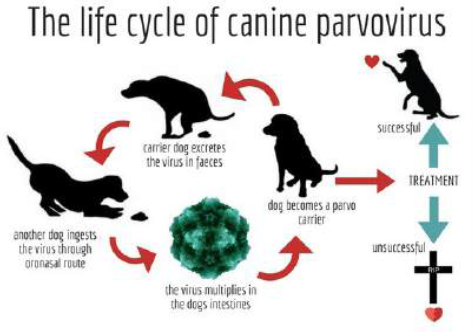
CPV appeared as a canine pathogen in 1978 and is thought to have come about as a mutation of the feline panleukopaenia virus. CPV is transmitted by a faeco-oral route. In other words, it is a viral infection that is spread by contact with infected dogs or contact with their faeces, hair, sniffing, feet of infected dogs, eating infected faeces, shared bedding, feeding and water bowl, including contamination from shoes, pavements, or any area where an infected dog has visited. This means that direct contact between dogs is not needed to spread the virus. CPV in the environment is resistant to heat, some detergents and alcohol and can live in the soil for several months. CPV affects dogs aged between 6 weeks to 6 months, as most adult dogs are immune due to vaccinations or previous infections. That is not to say that an adult dog will not get the virus. The virus attacks the rapidly dividing cells in the body, like the lining of the digestive tract or in developing white blood cells. Dogs infected with the virus show clinical signs usually within 7-10 days of the initial infection. PVC results in the puppy having bloody diarrhoea, vomiting and a compromised immune function.
What signs should you look for?
Loss of appetite, vomiting, severe diarrhoea; often bloody, abdominal pain and bloating, acting tired and weak. Fever can occur, but most have a low temperature and severe dehydration. A good indication of CPV is when the dog presents with bloody stained faeces that has a yellowish tinge and a very distinct and unpleasant smell.
Prevention
Be informed and proactive. Recovered dogs can shed parvovirus for up to two weeks after illness. Therefore, it is advisable to keep dogs away from dogs who have recently had the disease. The best method is to vaccinate your puppy. It is a recommended core vaccine for all dogs. These include the DHPP vaccine (Distemper, Hepatitis, Parainfluenza and Parvovirus). Puppies receive a CPV vaccination as part of the vaccines given at 6 – 8 weeks, repeated at 3 – 4 weeks until puppies are 16 weeks of age. Booster at one year of age and then every 3 years thereafter are advised to maintain immunity thought-out adulthood. When puppies have had the vaccination, it is advisable to keep them indoors for up to 7 days, as they will be shedding the virus. Proper hygiene is also important. Try to avoid letting your puppy or adult dog encounter the faecal waste of other dogs while walking or playing outdoors. Picking up and disposing of your dog’s waste material is one way of limiting the spread of the disease.
Socializing your pup
The socialization dilemma – you now know that your puppy is not fully protected until he has had his 16-week vaccine, which overlaps with the critical socialization period of a puppy (between 3 – 16 weeks). How do you get him socialized without putting him at unnecessary risk of contracting the virus? You do so with caution and common sense. As discussed above, there is no way you can 100% protect your puppy from the virus (you could bring it into your house on your feet). However, the risk of parvo with ‘CAREFUL’ socialization is much lower than the risk of serious behaviour problems with ‘NO’ socialization.
In general, puppies can start classes as early as 8 weeks of age. They should have received a minimum of one set of vaccines at least 7 days before the first class and vaccines should be kept up throughout the class. The American Veterinary Society of Animal Behaviour believes that it should be the standard of care for puppies to receive such socialization before they are fully vaccinated. Socialization is particularly important and should occur as part of a well-organized program that incorporates other preventive measures. These include proper vaccination protocols, cleaning up of faeces and disinfecting the area if there is a suspected contamination. We at the club, ensure that these protocols are adhered to, to protect all member’s dogs. Try to avoid dog parks, beaches, walking down the street or heavily attended areas until after the 16 weeks.
Can it be treated successfully?
There is no treatment to kill this virus once it infects a dog, but the virus does not actually cause death. Death occurs due to secondary infections and dehydration. Therefore, it is important to get your pup to the vet as soon as possible if he is displaying any of the symptoms as described above. However, survival up to seven days after clinical signs is associated with recovery and lifelong immunity. Survival of at least 90% of cases are known where prompt, aggressive therapy is implemented.
Can you kill the virus in the environment?
Due to the stability of the CPV, it is therefore, important properly to disinfect contaminated areas. You can do this by cleaning food, and water bowls and any other infected areas with 250L of chlorine bleach in five litres of water. It is imperative that chlorine bleach or glutaraldehyde-based disinfectants be used as there are many products out there that will not kill the CPV.
Why do vaccines fail?
Vaccination may fail from variable protection given by Maternally Derived Antibodies (MDA). The window period exists in puppies from 6 weeks where declining MDA can allow natural infection, but also prevent an effective vaccine-induced humeral response. Modern high-titer vaccines are designed to overcome MDA and try to give immunity before MDA wears off. Rottweilers, Dobermans (black and tan breeds) and Staffordshire Bull Terriers are at a higher risk of infection due to suspected poor humeral responses to vaccination and increased MDA resistance.
There is no evidence that CPV is transmissible to cats or humans. However, people can spread it to other dogs if they have the virus on their hands or clothing and then touch another dog or their environment (e.g., kennel, toys, grooming tools).
References:
1. Spencer S, Tappin. S. Available from www.vettimes.co.uk: Recommendations for treating and preventing canine parvovirus | Vet Times
3. Otto C M, Jackson C B, Rogell E J et al (2001). Recombinant bactericidal/ permeability-increasing protein (rBPI21) for treatment of parvovirus enteritis: a randomised, double-blinded, placebo controlled trial, J Vet Intern Med15(4): 355–360
We all want what is best for 0ur fur babies, ranging from love and care to nutrition.
I am sure anyone who has shopped for dog food knows that there are virtually hundreds of options and brands of food with loads of ingredients: wet, dry and raw food, age-specific food, maintenance diets, restricted diets, to name but a few. So many choices and then included in all of this is all sorts of advertising and marketing claims to unravel.
The label on the package is the best tool to use when you make a choice, but if anyone who has looked at a label knows they are not easy to understand – never mind needing a degree to decipher the information, fantastic eyesight is imperative– a magnifying glass is a prerequisite, (maybe just for us older folks).
I am going to try simplifying and explain how to read a dog food label.
Most pet food labels must have the following eight required label items for pet food. According to AAFCO, the following must appear on packaging:
Product and brand name.
Name of species for which the pet food is intended.
Quantity statement – how much food is in the bag.
Guaranteed analysis – this specifies the amount of specific nutrients.
Ingredient statement – this must be listed in descending order by weight.
Nutritional adequacy statement, which must be backed up by testing that proves the food provides a certain level of nutrients. It can also include the life stages the food is appropriate for.
Feeding direction/instructions.
Manufacturers or distributors name and address.
Ok, this is the list but now, what does that mean? I will give a short description to demystify the wording on some of them – the rest are self-explanatory.
Product and brand name:
95% Rule: At least 9 5% of the product must be the named ingredient like “Beef for Dogs,” it must include at least 95% beef, not counting the water for processing. When counting the water, the main product must be about 70% of the total product. The remaining 5% will be those required for the nutritional reasons like vitamins and minerals and small amount of any other ingredient.
25% Rule: “Snookims Chicken Dinner,” “Beef platter for puppies,” are examples of 25% rule. The named ingredients must consist of at least 10% of the total product by weight and at least 25% of the product by weight (not including the added water). The product must, however, include the qualifying terms, like “dinner,” “platter” and so on.
“With” Rule: Including words “with” or “similar” to a label, e.g., “Delish stew with real Beef,” the “WITH …” ingredient needs only to be 3% of the product. So, the product must have at least 3% beef. While “Teds Super food with Lamb and Rice,” should contain at least 3% Lamb and 3% rice.
Flavour Rule: If the label says , “Lamb Flavour Dog Food,” then a specific % of lamb is not required but must provide the flavour and the flavour descriptor must be printed in the same size, style and colour as the word “lamb.”
Guaranteed analysis:
There are four basic nutritional guarantees required.
Minimum percentage of crude protein
Minimum percentage of crude fat
Maximum percentage of crude fibre
Maximum percentage of moisture
Crude refers to the specific method of testing the product, not the quality of the products.
Ingredients:
This section I think is the most important part to read. Ingredients must be listed in descending order by weight, individually, and any collective ingredients such as ‘animal protein product’ are not allowed. If the meat or meat by-products do not come from cattle, swine, sheep or goats, the species must be declared in the ingredient list.
Nutritional Adequacy Statement:
Look for the fine print on the inside or back of the package – this is another important part of a label as it is the key to matching pets’ nutritional needs with a product.
“Complete and Balanced” means that the food has met specific standards and provides complete and balance nutrition for all stages of adult dogs, as stated by AAFCO. “Complete” means the product contains all the nutrients and “Balanced” means that the nutrients are present in the correct ratio.
Life Stages – the recognized life stage is:
Gestation/lactation
Growth
Maintenance
All life stages
Different quantities and ratios of nutrients are necessary for different life stages.
Feeding Directions:
Remember these are guidelines, not regulations. The label tells you how much you should feed, but remember breed, temperament, environment, and various other factors can influence food intake.
It is important to take note of ‘sell by’ or ‘best-used-before” and do not buy or use before, as expired dog food does offer less nutritional value and can grow harmful bacteria/mold that can make your dog sick.
So, to break it down, here is the shortened version to help you remember all the above when you are standing in the food aisle.
The first ingredient listed is the greatest ingredient in the food by weight.
The sell-by date stops you from buying food that is rancid or gone bad.
The guaranteed analysis tells you how much protein, fat, fiber and water the food contains.
The quantity of different products should be compared on a cost per kg.
Feeding directions are recommendation, not rules. Do your body conditioning score, as provided in last newsletter.
Hope this will assist you when shopping and trying to read the label.
The main aim of a feeding plan for puppies is to ensure that you create a healthy adult dog. This will allow optimal healthy growth, optimize trainability, immune functions and to prevent obesity and developmental orthopaedic disease.
Growth is an extraordinarily complex process, and it involves genetics, nutrition, and environmental influences. In the first six months, puppy’s nutrition’s needs change quickly, and it is therefore, imperative that the nutrients and calories the pup needs from his food are available and correctly balanced for optimal development.
Nutrition plays a role in health and development and affects:
Immune system
Body composition
Growth rate
Skeletal development.
Feeding puppies, a diet that is high in energy density (energy density is the amount of energy (calories) per gram of food), accelerates their growth rate, whilst feeding lower energy density food slows it down. Examples of high-energy density food are biscuits, peanuts, butter and cheese.
A puppy will, however, still reach the same adult weight no matter if they were fed a high – or low-density diet. Therefore, it is counterproductive to accelerate growth rates, with nutrient-dense food that is beyond the specific dog’s capacity at which the skeleton can properly develop and shape itself.
Growth rates are affected by the nutrient density of a food and on the amount of food being fed. Large and giant breed dogs (they need fewer calories per unit of body weight and mature at a slower rate compared to smaller breed dogs). In comparison, small breed puppies have a faster growth rate and need more energy per unit of body weight compared to adult dogs. Small breed puppy foods also have extra levels of protein, fat, and Vitamin B to help them with the elevated energy levels. Puppies need to be fed to grow at an ideal rate for bone development and body condition rather than at a maximum rate. Therefore, it is imperative to reiterate that feeding for maximum growth increases the risk for skeletal deformities and decrease longevity in dogs.
The best way to confirm if your puppy’s growth rate is healthy you can assess this by its Body Condition Scores (BCS) – (see You Tube video on how to assess BCS at https://youtu.be/tf_-rwxqHYU). Body condition scoring is a visual assessment of an animal’s nutritional status, comparing its ideal shape and showing if the animal is under or overweight. It is a great tool in describing to you the idea of what the ideal weight should be.
All puppies should have their BCS evaluated and reassessed at least every two weeks to adjust amounts fed and thus growth rates. You need to be aware and know how to assess body condition and become more cognizant of what a healthy appearance of a growing puppy should be.
Prevention of obesity is of utmost importance as it is exceedingly difficult then to maintain normal weight once a pup has been overfed. Just like people, when puppies become overweight, it is difficult to return to and maintain normal weight. If overweight and obesity is carried into adulthood, the risks for several diseases are increased – these are hypertension, heart disease, diabetes mellitus, dyslipidaemia, osteoarthritis, heat, and exercise intolerance and decrease immune function.
Feeding Plan
Always select food with the recommended levels of key nutritional factors, to ensure the selected food has been approved for puppy growth by a credible regulatory agency (e.g. AAFCO).
Try avoiding free-choice feeding; rather use food-restricted meal feeding, dividing the amount fed into three to four daily feeds, up until 4-6 months, then feed two or more meals after six months. Remember puppies have exceedingly small stomachs so need feeding little and often. A good plan to follow in the early stages is to give food for a period of 10-20 minutes, remove what is left at the end of that time and offer fresh food at the next mealtime, try not to leave food lying around.
Find out the initial amount to feed from the recommendation on the product package. Just remember these are guidelines or starting points and not as absolute requirement -you might need to adjust accordingly to the puppy in front of you.
Learn how to perform body condition scoring and then monitor body condition at least every two weeks and adjust the amount fed by 10% increments to maintain a BCS of 2.5 to 3.5.
Provide regular daily exercise.
Do not add nutrient supplements if the pet is being fed a ‘balanced’ diet. Supplementation of a ‘complete’ diet can be risky and lead to growth abnormalities, especially in large and giant breeds.
Fresh supply of clean water must always be available.
Always chose a diet that is clearly labelled as ‘complete’ for puppy or growth stage of life – do not feed adult dog food to puppies.
Weigh out the puppy food at the start of the day, to ensure that you give the correct amount of food.
Underfeeding through the growth phase is healthier than overfeeding and result in the same mature size.
For a diagram for a better understanding of the Body Condition Scare please go online to https://www.aaha.org/ globalassets/02-guidelines/weight-management/weightmgmt_bodyconditionscoring.pdf
Reference for feeding plan: Debraekeleer ,J.Gross,K.Zicker S C. (20010d). FeedinGrowing Puppies: Postweaning to Adulthood. In Hand, Philip, W. Toll. Gillette, RL,. Hand, MS., (eds), Small Animal Clinical Nutrition,5th de. Chapter 18. Mark Morris Institute