
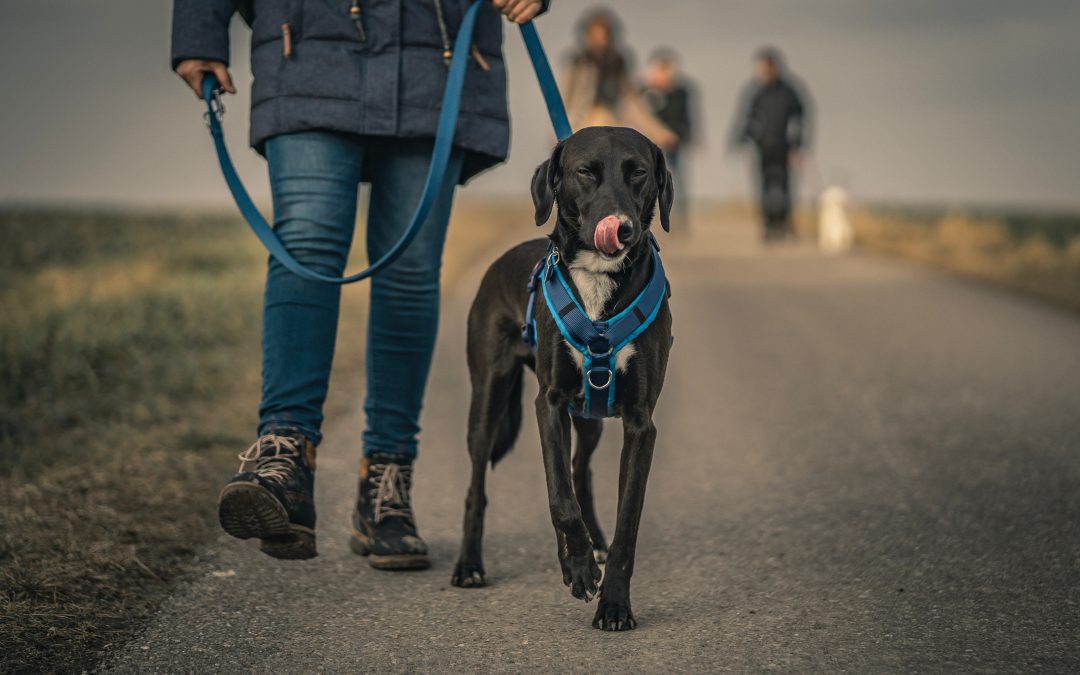
LOOSE LEASH WALKING
Walking your dog should be a pleasure and should not be difficult to learn, but it often proves to be one of the most challenging behaviors for owners to teach their dogs.
I have seen many dogs come to training and happily proceed to drag their owner across the field from their cars, before and after class.
Let’s look at why this happens?
Dogs pull on the leash because they can, and it is beneficial. They have learnt from puppyhood, that pulling on the leash will get them to where they want to go. They pull, and we follow. Behaviour that is reinforced will be repeated. If a dog has learned to pull and is rewarded (by getting to where they want to go), they will continue to pull whenever the opportunity occurs.
The opposition reflex can be described as follows: If I attach a rope to your belt and pull, you will pull back. If I push, you will most probably push back. This is a natural response which allows you to maintain your balance and stay upright. Dogs have it too, and it occurs when the leash tightens on their collar—they will automatically pull against it.
Dogs do not walk naturally beside their owners. We are slow and boring! Dogs will dart, dash, trot or run as everything is exciting and rewarding. You never see a dog walking at human pace (unless you have a senior dog). If you had to let your dog off leash, they will automatically run ahead.
Owners can also encourage leash pulling, especially if they are in a rush to get somewhere, even when they understand the concept of polite leash training. Due to lack of consistency, owners allow the dog to pull.
Dogs also pull because the owner never gives them slack leash. Owners keep the leash tight (tight lead syndrome), even when the dog is walking politely by your side.
Loose leash versus heel position
Heel position is when you want your dog to walk precisely beside you, normally required for an obedience ring. Loose leash walking is when you want to take a casual stroll without the dog yanking your shoulder out of its socket.
Techniques to use
- Start off leash in the least distracted environment. The passage at home or in the lounge. Yes, you can teach your dog to walk on the leash by working with no leash.
- Have a supply of tasty treats and use a marker word like ‘Yes’ (a marker word is a word that you use, which tells the dog that the dog is preforming the correct behaviour, followed by a reward).
- Start walking around, any time your dog is near you, say ‘Yes’ and give your dog a treat. This is to get the dog to understand that walking with you is beneficial and rewarding. Use a high rate of reinforcement with cheerful praise during this exercise.
- When your dog walks with you, reward only when he is by your side—you are now “shaping” the behaviour. (Shaping is breaking a desired behaviour into small steps and reinforcing approximations of the final behaviour, escalating the criteria until you have the final behaviour).
- Praise can be anything from verbal praise to food to life rewards (games, like throwing ball or game of tug).
- When your dog is walking by your side consistently, it’s time to add the leash.
- The reason we start with no leash, is that neither you nor your dog can pull on the leash if it is not there. Point to remember is that your dog’s leash is not a steering wheel or joystick, all it is a safety belt that stops the dog from running off. It’s not there for you to pull your dog around.
- Make sure there is enough slack in the leash, so it stays loose when your dog is next to you.
- You can hold the leash in your hand or use a waist-belt or attach the leash to your body (only if the dog is not big enough to drag you down the road).
- Use a cue word, “let’s walk” or “heel” in a cheery tone and start walking forward. The minute the dog moves forward, say ‘YES’ and reward. In the beginning, use the marker word and reward rapidly–almost every step. When your dog’s attention is on you (treat-dispensing machine) you can gradually reduce the rate of reinforcement, but only when you are sure the dog understands. Then you can start treating randomly, so your dog never knows when the next reward is coming, as dogs are masters of identifying patterns.
- Where you deliver the treat is also very important. Rewarding when your dog is in position, on your left side by your knee. It reinforces that position.
Troubleshooting
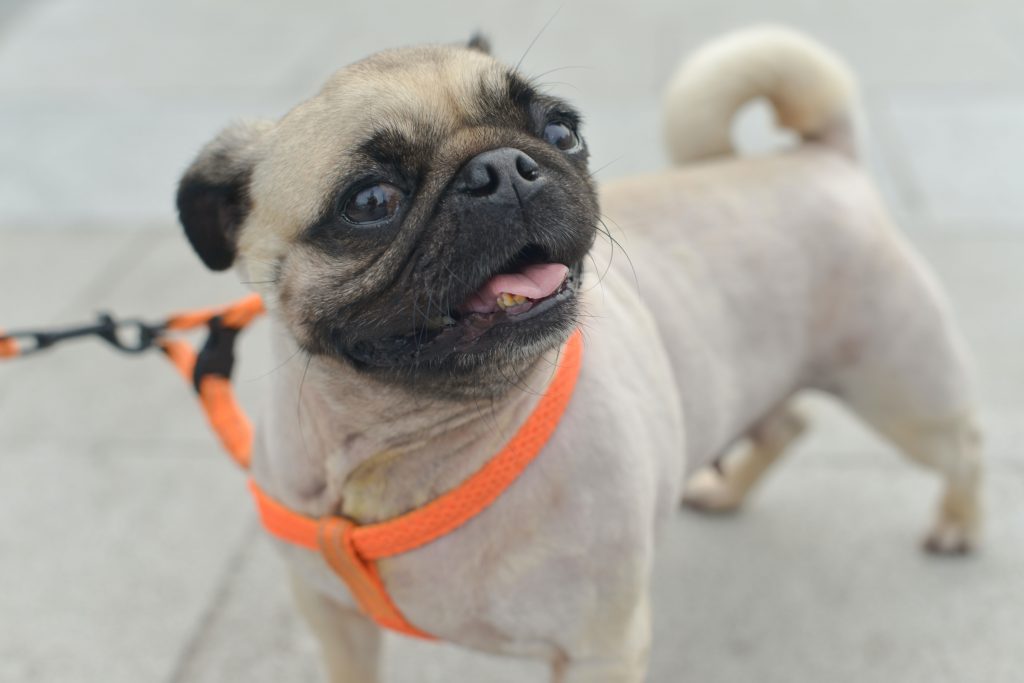
Sometimes it does not work out. The dog might forge ahead of you, and the leash will become tight, or he may stop to sniff something.
- When passing something that you know your dog cannot resist, use a lure to get your dog past the distraction. Put the treat at the end of his nose (remember the higher the distraction the higher the value of the reward).
- Become a tree. When the leash tightens, stop walking. Just stand still, like a tree, and wait. The dog will eventually turn around and look at you and wonder why you are not walking. When he does and the leash slackens, say your marker word and reward when the dog comes back to the reinforcement zone. Now move forward and use higher rate of reinforcement if necessary until he is walking politely with you.
- If the dog does not look back at you, start backing up slowly, with gentle pressure on the leash. No jerking. This means you are walking away from where he wants to go. When the leash slackens, mark and treat and resume walking to where you were going.
- You can walk in a circle. A dog cannot pull if you are walking in a circle. Proceed to walk in a large-size circle, encouraging the dog to walk with you.
- Direction changes can also be useful. If your dog moves out in front of you, before the leash becomes to taunt, turn around and walk in the opposite direction. Do not let him hit the end of the leash with a jerk if he does not turn with you! As you turn, use a cheerful tone and excited noises to let him know you are changing direction. When he notices mark and reward in position.
Things to do before taking your dog out on a walk
- Exercise first. Spend 10 – 20 minutes playing ball or tug or agility in the backyard. This will take the edge off the dogs’ excitement and reduce his energy level.
- Teach him a solid “sit” so it becomes his default behaviour, a behaviour he can then choose to offer when he does not know what else to do.
- Pick up his leash randomly throughout the day. That way, he will not anticipate and get over excited.
- Learn to use a non-reward marker–this is called “negative punishment.” It does not mean that you need to hit the dog on the head with the lead. For example, pick up the leash, if he does the zoomies (or a behaviour you do not want), say, “Oops!” in a happy voice. This tells him he will not receive a reward. Put the leash down and walk away. When he settles, repeat. If he sits, then put the lead on. If he again goes over the top, say another ‘Oops’ and put the leash down. You are teaching him that getting excited makes walking go away whilst staying calm makes walks happen.
Consistency is key, happy walking!
reference: https://www.chicagotribune.com/